CRM Software for Small Business introduces a powerful tool that can revolutionize how small businesses operate and thrive in today’s competitive market. From enhancing customer relationships to streamlining operations, this guide delves into the key aspects of CRM software tailored for small business needs.
As we navigate through the intricacies of CRM software, we will uncover crucial insights and best practices to empower small businesses in leveraging this technology for growth and success.


Overview of CRM Software for Small Business
CRM software, or Customer Relationship Management software, is essential for small businesses to effectively manage interactions with customers and potential customers. It helps businesses streamline processes, improve customer relationships, and boost sales.
Popular CRM Software Options for Small Businesses
- HubSpot CRM: Offers a free version with basic features such as contact management and email tracking.
- Zoho CRM: Known for its affordability and customization options, catering to the needs of small businesses.
- Salesforce Essentials: Designed specifically for small businesses, providing tools for sales and customer support.
Benefits of Using CRM Software for Small Business Operations
Implementing CRM software in small business operations can bring numerous benefits:
- Improved Customer Relationships: CRM software helps businesses keep track of customer interactions, preferences, and purchase history, enabling personalized communication.
- Increased Efficiency: By automating tasks like data entry, follow-ups, and reporting, CRM software saves time and allows employees to focus on high-value activities.
- Enhanced Sales and Marketing: With CRM software, businesses can analyze customer data, identify trends, and target the right audience, leading to more effective sales and marketing strategies.
- Centralized Data Management: All customer information is stored in one place, making it easily accessible to all team members, promoting collaboration and consistency in customer interactions.
Features to Look for in CRM Software
When choosing CRM software for a small business, it is crucial to consider specific features that can help streamline processes and improve customer management. Here are some key features to look for in CRM software designed for small businesses:
Customization Options
Customization options are essential for small businesses as they allow the software to be tailored to meet specific needs and requirements. Look for CRM software that offers the ability to customize fields, workflows, and reports according to your business processes.
Integration Capabilities
Integration capabilities are vital for small businesses that use multiple tools and platforms. Choose CRM software that seamlessly integrates with other business applications such as email marketing tools, accounting software, and e-commerce platforms to ensure smooth data flow and streamlined operations.
Automation Features
Automation features can significantly benefit small businesses by reducing manual tasks and streamlining processes. Look for CRM software that offers automation features such as lead scoring, email campaigns, task assignments, and follow-up reminders to improve efficiency and productivity.
Mobile Accessibility
In today’s fast-paced business environment, having mobile accessibility is crucial for small businesses. Opt for CRM software that provides mobile apps or responsive web interfaces, allowing you to access customer information, track sales activities, and manage tasks on the go.
Analytics and Reporting
Analytics and reporting tools are essential for small businesses to track performance, identify trends, and make informed decisions. Choose CRM software that offers robust analytics capabilities, customizable reports, and real-time insights to help you measure the success of your customer management efforts.
By considering these key features when selecting CRM software for your small business, you can ensure that you choose a solution that meets your specific needs and helps you effectively manage customer relationships.
Implementation of CRM Software
Implementing CRM software effectively in a small business setting is crucial for optimizing customer relationships and improving overall efficiency. Here are the steps for successful implementation, tips for training employees, common challenges faced, and how to overcome them.
Steps for Implementing CRM Software
- Define clear objectives and KPIs to align with business goals.
- Select the right CRM software that fits your business needs and budget.
- Customize the CRM software to match your business processes and workflows.
- Migrate existing data to the CRM system accurately.
- Train employees on how to use the CRM software efficiently.
- Monitor and evaluate the performance of the CRM software regularly.
Tips for Training Employees on Using CRM Software Efficiently
- Provide comprehensive training sessions for all employees involved.
- Offer hands-on practice and real-life scenarios to enhance learning.
- Create user guides and resources for easy reference.
- Encourage feedback and address any issues promptly.
Common Challenges During CRM Software Implementation and Solutions
- Resistance to change: Communicate the benefits of CRM software and involve employees in the decision-making process.
- Data migration issues: Plan and execute data migration carefully to avoid data loss or corruption.
- Lack of user adoption: Provide ongoing support, training, and incentives to encourage user engagement.
- Integration problems: Ensure seamless integration with existing tools and systems through proper testing and troubleshooting.
Initial Setup Process for CRM Software in a Small Business
The initial setup process involves defining objectives, selecting the right software, customizing workflows, migrating data, training employees, and monitoring performance.
Importance of Defining Clear Objectives and KPIs
Clear objectives and KPIs help align CRM implementation with business goals, track progress, and measure success effectively.
Best Practices for Integrating CRM Software with Existing Tools
- Conduct thorough compatibility checks before integration.
- Ensure data consistency and accuracy across all systems.
- Provide training and support for seamless integration.
Significance of Regular Maintenance and Updates
Regular maintenance, updates, and data backups are essential to ensure the longevity and efficiency of CRM software, preventing data loss and system downtime.
Troubleshooting Guide for Common User Errors
- Encourage users to report issues promptly for timely resolution.
- Provide a centralized support system for addressing user errors efficiently.
- Document common errors and solutions for quick reference.
Strategies for Monitoring and Evaluating CRM Software Performance
- Track key metrics and KPIs to measure the impact of CRM software.
- Analyze data to identify areas for improvement and make necessary adjustments.
- Regularly review user feedback and system performance for continuous enhancement.
Customization and Integration Options
Customization and integration options play a crucial role in maximizing the benefits of CRM software for small businesses. By tailoring the CRM system to specific business needs and seamlessly integrating it with other tools, businesses can enhance workflow efficiency and productivity significantly.
Custom Fields and Business Needs
Setting up custom fields in CRM software allows small businesses to capture and track data that is unique to their operations. For example, a real estate agency may create custom fields to store property details, while a consulting firm may add fields for client preferences. This customization ensures that the CRM system aligns perfectly with the business requirements, enabling better organization and analysis of data.
Integration with Email Marketing Platforms
Integrating CRM software with email marketing platforms enables small businesses to create targeted campaigns based on customer data stored in the CRM system. By syncing contact information and interactions, businesses can personalize marketing messages, improve customer engagement, and track campaign performance more effectively.
Integration with Accounting Software
Integrating CRM software with accounting software streamlines financial processes by connecting sales data with invoicing and payment information. This integration eliminates manual data entry, reduces errors, and provides a comprehensive view of customer transactions, helping businesses make informed financial decisions and improve cash flow management.
Automation and Productivity
Automation features in customized CRM solutions automate repetitive tasks, such as sending follow-up emails, assigning leads, or updating records, saving time and increasing efficiency. By automating routine processes, businesses can focus on high-value activities, enhance customer relationships, and drive growth.
Off-the-Shelf vs. Customized CRM Solutions
Off-the-shelf CRM solutions offer standard features that may not fully meet the unique requirements of small businesses. In contrast, customized CRM solutions allow businesses to tailor the system to their specific needs, providing greater flexibility, scalability, and functionality. While off-the-shelf solutions are cost-effective and easy to implement, customized solutions offer a higher level of customization, integration, and long-term value for small businesses.
Cost Considerations for Small Businesses
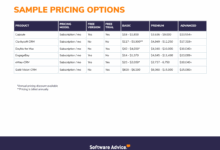
When it comes to selecting a CRM software for a small business, cost considerations play a crucial role in the decision-making process. Understanding the typical pricing models, comparing costs, and budgeting effectively are essential steps to ensure that the chosen CRM software aligns with the financial capabilities of the business.
Typical Pricing Models for CRM Software
CRM software for small businesses often offer different pricing models to cater to varying needs and budgets. Some common pricing models include:
- Monthly Subscription: Many CRM software providers offer a monthly subscription model, where businesses pay a fixed amount per user per month.
- Perpetual License: Some CRM software options require a one-time payment for a perpetual license, allowing businesses to use the software indefinitely.
- Usage-Based Pricing: Certain CRM software solutions may charge based on the number of contacts or the volume of data stored and accessed.
Comparing Costs and Value
When comparing the costs of different CRM software options, it’s crucial to consider the value they provide in return. While some software may have a higher upfront cost, they might offer advanced features and customization options that can significantly benefit a small business in the long run. On the other hand, more affordable CRM software may lack certain functionalities or integrations that could limit business growth.
Tips for Budgeting and Selection
Here are some tips for budgeting and selecting a CRM software that fits within a small business budget:
- Define Your Needs: Identify the essential features and functionalities your business requires in a CRM software to avoid paying for unnecessary extras.
- Consider Scalability: Choose a CRM software that can scale with your business as it grows to prevent the need for frequent upgrades or migrations.
- Look for Free Trials: Take advantage of free trials offered by CRM software providers to test the software and assess its compatibility with your business operations before making a financial commitment.
- Factor in Implementation Costs: Remember to include implementation costs, such as training and support, in your budget planning to avoid unexpected expenses down the line.
Data Security and Privacy
Data security and privacy are crucial aspects when it comes to CRM software for small businesses. Protecting sensitive customer information from cyber threats and unauthorized access is essential for maintaining trust and credibility.
Key Security Features for Small Businesses
- Role-based access control to limit user permissions and access to specific data.
- Encryption of data both in transit and at rest to prevent unauthorized access.
- Regular software updates and patches to address security vulnerabilities.
- Audit trails to track user activity and changes made to the CRM system.
Best Practices for Data Protection
- Implement strong password policies and multi-factor authentication for added security.
- Train employees on data security awareness and best practices to prevent data breaches.
- Regularly backup data to ensure quick recovery in case of data loss or system failures.
Role of Encryption in Safeguarding Customer Data
Encryption plays a vital role in protecting customer data by encoding information in a way that only authorized parties can access it. Utilizing encryption ensures that even if data is intercepted, it remains secure and unreadable to unauthorized individuals.
Common Cyber Threats for Small Businesses
- Phishing attacks that trick employees into disclosing sensitive information.
- Ransomware that encrypts data and demands payment for decryption.
- Malware infections that can compromise CRM systems and steal data.
Importance of Access Control Mechanisms
Access control mechanisms are essential for protecting sensitive information stored in CRM databases. By setting up role-based access controls and permissions, businesses can ensure that only authorized users have the necessary access to specific data, reducing the risk of data breaches.
Customer Support and Training
Customer support and training play a crucial role in the successful implementation and utilization of CRM software for small businesses. Effective support and training can ensure that businesses are able to leverage the full potential of their CRM system and maximize its benefits.
Role of Customer Support
Customer support is essential for small businesses using CRM software as it provides assistance and guidance to users whenever they encounter issues or have questions regarding the software. It helps in troubleshooting technical problems, resolving queries, and ensuring smooth operation of the CRM system.
Effective Customer Support Strategies
- 24/7 Support: Offering round-the-clock support ensures that businesses can get assistance whenever they need it, even outside regular business hours.
- Multi-channel Support: Providing support through various channels like phone, email, live chat, and knowledge base can cater to different user preferences.
- Personalized Support: Tailoring support services to the specific needs of each business can enhance the overall customer experience and satisfaction.
Importance of Ongoing Training
Ongoing training is crucial for maximizing the benefits of CRM software as it helps users stay updated on new features, functionalities, and best practices. Continuous training ensures that employees are proficient in using the software effectively, leading to improved productivity and performance.
Mobile Accessibility and Remote Work
In today’s fast-paced business environment, the ability to access CRM software on mobile devices and work remotely has become increasingly important for small businesses. This flexibility allows employees to stay connected, collaborate effectively, and access crucial customer data anytime, anywhere.
Significance of Mobile Accessibility
Mobile accessibility in CRM software enables employees to access important customer information on the go, increasing productivity and responsiveness. It allows for real-time updates, communication, and task management, ultimately leading to better customer service and satisfaction.
- Access to customer data on the field
- Real-time updates and notifications
- Improved communication and collaboration
Benefits of Using CRM Software for Remote Work
Using CRM software for remote work scenarios provides employees with the flexibility to work from anywhere while maintaining access to essential tools and data. It increases efficiency, promotes teamwork, and ensures consistency in customer interactions.
- Flexibility and work-life balance
- Improved team collaboration
- Consistent customer service delivery
Optimizing CRM Software for Mobile Use and Remote Work
To optimize CRM software for mobile use and remote work environments, businesses can implement user-friendly interfaces, provide training on mobile functionality, and ensure seamless integration with other tools and applications used for remote work.
- Customizable mobile dashboards
- Mobile-friendly design and navigation
- Integration with project management tools
Specific CRM Features for Mobile Accessibility and Remote Work
Certain CRM features enhance mobile accessibility and remote work productivity, such as mobile apps, offline access, cloud storage, and secure data encryption. These features enable employees to work efficiently and securely from any location.
- Mobile apps for iOS and Android
- Offline access to customer data
- Cloud-based storage for remote access
- End-to-end encryption for data security
Importance of Data Security Measures
When accessing CRM software remotely, data security measures are crucial to protect sensitive customer information. Implementing multi-factor authentication, encryption, and regular security audits can help prevent data breaches and ensure compliance with privacy regulations.
- Multi-factor authentication for secure access
- Data encryption for protection against cyber threats
- Regular security audits and updates
Comparison Table of CRM Software Options
Below is a comparison table showcasing different CRM software options tailored for mobile accessibility and remote work functionalities. This table highlights key features, pricing, and compatibility to help small businesses choose the right CRM solution for their mobile and remote work needs.
| CRM Software | Mobile App Availability | Offline Access | Cloud Storage | Data Security Measures | Pricing |
|---|---|---|---|---|---|
| CRM A | Yes | Yes | Yes | End-to-end encryption | $ |
| CRM B | Yes | Yes | Yes | Multi-factor authentication | $$ |
| CRM C | Yes | Yes | Yes | Data encryption | $$$ |
Scalability and Growth
When it comes to small businesses, scalability and growth are crucial factors to consider when selecting CRM software. A scalable CRM system should be able to accommodate the evolving needs of a growing business without the need for constant upgrades or replacements.
Features for Scalability
- Customizable Workflows: CRM software that allows for the creation of custom workflows can easily adapt to changing business processes as the company grows.
- Scalable Database: The ability to increase storage capacity and handle larger amounts of data is essential for a growing business.
- Integration Capabilities: CRM systems that can easily integrate with other business applications and tools offer scalability by expanding functionality as needed.
Selection Considerations
- Cloud-Based vs. On-Premise: Cloud-based CRM solutions are often more scalable as they can easily adjust resources based on demand, making them ideal for small businesses experiencing growth.
- Cost-Effective Scalability: Consider the cost implications of scaling up the CRM system in the future to ensure it aligns with the budget of a small business.
Key Scalability Factors
| Factor | Description |
|---|---|
| Customization | The ability to tailor the CRM system to specific business needs. |
| Data Handling | The system’s capacity to manage increasing amounts of data efficiently. |
| Integration | Seamless integration with other tools and applications for enhanced functionality. |
| Scalable Pricing | Flexible pricing options that allow for easy expansion without significant cost increases. |
Reporting and Analytics Capabilities
Reporting and analytics capabilities in CRM software are crucial for small businesses as they provide valuable insights into customer behavior, sales performance, and overall business operations. By analyzing data collected through CRM software, small businesses can make informed decisions, identify trends, and tailor their strategies to meet customer needs effectively.
Comparison of CRM Software Options
- Salesforce: Offers a wide range of pre-built reports and customizable dashboards, allowing users to track sales performance, customer interactions, and marketing campaigns.
- HubSpot: Provides detailed analytics on customer engagement, lead generation, and email marketing effectiveness, with the ability to create custom reports based on specific metrics.
- Zoho CRM: Offers advanced reporting features such as forecasting, pipeline analysis, and sales trends, along with customizable reports for different departments and functions.
Leveraging CRM Data Analytics for Small Businesses
- Identify Key Metrics: Determine which metrics are most relevant to your business goals, such as customer acquisition cost, customer lifetime value, or conversion rates.
- Set Up Custom Reports: Utilize CRM software to create custom reports that track these key metrics and provide actionable insights for decision-making.
- Analyze Trends: Regularly review data insights to identify trends, patterns, and areas for improvement in customer relationships and sales performance.
- Implement Changes: Use the data gathered from CRM analytics to make strategic changes to your sales and marketing strategies, customer service processes, and overall business operations.
Key Metrics to Track Using CRM Analytics
Some key metrics that small businesses should track using CRM analytics include:
- Customer Acquisition Cost (CAC): Measure the cost of acquiring new customers to ensure profitability.
- Customer Retention Rate: Monitor customer loyalty and satisfaction to drive repeat business and referrals.
- Sales Conversion Rate: Track the percentage of leads that convert into paying customers to optimize sales processes.
- Lead Response Time: Evaluate the speed at which leads are contacted and converted to improve lead management.
User Interface and User Experience
User-friendly interface design plays a crucial role in the successful implementation of CRM software for small businesses. A well-designed interface can enhance user experience, streamline processes, and ultimately boost productivity and user adoption rates.
Examples of Intuitive User Interfaces
- HubSpot CRM: HubSpot offers a clean and intuitive interface with easy navigation, customizable dashboards, and drag-and-drop functionalities.
- Zoho CRM: Zoho CRM provides a user-friendly interface with a simple layout, customizable modules, and a unified view of customer data.
- Salesforce Essentials: Salesforce Essentials features a user-friendly interface that is easy to navigate, with customizable views, and a user-friendly mobile app for on-the-go access.
Positive User Experience and Productivity
A positive user experience can significantly impact the productivity of small businesses using CRM software. An intuitive interface reduces the learning curve for users, increases efficiency in data entry and retrieval, and promotes better engagement with the system. This, in turn, leads to higher user adoption rates and better utilization of CRM functionalities, driving overall business growth and success.
Industry-Specific CRM Solutions
Industry-specific CRM solutions are tailored to meet the unique needs of businesses operating in specific sectors. These specialized CRM software options offer industry-specific features and functionalities that can help small businesses in areas such as healthcare, real estate, or retail to streamline their customer relationship management processes effectively.
Healthcare CRM Solutions
- Healthcare CRM solutions offer features such as patient data management, appointment scheduling, and integration with electronic health records systems.
- These CRM solutions focus on HIPAA compliance and data security to ensure patient information is protected.
- Examples of healthcare CRM solutions include Salesforce Health Cloud, Pipedrive, and HubSpot CRM with healthcare integrations.
Real Estate CRM Solutions
- Real estate CRM solutions provide tools for managing property listings, tracking leads, and automating marketing campaigns.
- These CRM options often include features like property search functionality and real-time notifications for new listings.
- Popular real estate CRM solutions include Zoho CRM, Top Producer, and Propertybase CRM.
Retail CRM Solutions
- Retail CRM solutions focus on customer loyalty programs, inventory management, and omnichannel marketing strategies.
- These CRM software options often include POS integrations and customer segmentation tools for targeted marketing campaigns.
- Examples of retail CRM solutions are Vend POS, Lightspeed Retail, and Shopify CRM for retail businesses.
Industry-specific CRM solutions offer a more tailored approach to customer relationship management, providing small businesses with the tools they need to succeed in their specific sectors.
Case Studies and Success Stories
In this section, we will explore real-life examples of small businesses that have successfully implemented CRM software and the impact it has had on their customer relationships, sales, and overall business performance.
Impact of CRM Software on Small Businesses
- Case Study 1: XYZ Bakery
- XYZ Bakery, a small local bakery, implemented CRM software to manage customer orders and preferences. By tracking customer interactions and purchase history, they were able to personalize their marketing efforts and offer targeted promotions. As a result, XYZ Bakery saw a significant increase in customer retention and satisfaction, leading to a boost in sales.
- Key Takeaway: Personalized marketing strategies based on CRM data can have a positive impact on customer loyalty and revenue for small businesses.
Improving Sales with CRM Software
- Case Study 2: ABC Consulting
- ABC Consulting, a small consulting firm, integrated CRM software to streamline their sales process and track leads effectively. By automating follow-up emails and reminders, they were able to nurture leads more efficiently and close deals faster. This resulted in a significant increase in their sales pipeline and revenue.
- Key Takeaway: CRM software can help small businesses improve sales efficiency and productivity by automating tasks and tracking leads effectively.
Enhancing Customer Relationships
- Case Study 3: 123 Fitness Studio
- 123 Fitness Studio implemented CRM software to better understand their members’ preferences and engagement levels. By sending personalized workout recommendations and tracking member attendance, they were able to increase member satisfaction and loyalty. This led to a decrease in churn rate and an increase in referrals.
- Key Takeaway: CRM software can help small businesses build stronger customer relationships by providing personalized experiences and improving communication.
End of Discussion
In conclusion, the journey through CRM Software for Small Business unveils a world of possibilities for small enterprises looking to boost efficiency, drive revenue, and foster lasting customer connections. By embracing the right CRM solution, small businesses can unlock their full potential and thrive in today’s dynamic business landscape.
